In the complex world of immunology, proteins are essential to carry out crucial experiments and tests. With that said, some proteins are often the go-to choice by researchers for specific studies, and the LIGHT protein is one of them.
While the name might sound simple, the role that this protein plays in the immune system is incredibly sophisticated. However, you can’t just study a protein as is; to do so, scientists need specialized tools that can find this specific protein among millions of others in a human cell, as microscopes are not much useful for this task.
This is where the anti-LIGHT antibody (specifically the version known as Clone 7B9E12) comes into play.
Understanding the LIGHT Protein
It is a protein found on the surface of various immune cells, particularly T-cells, and it is officially known as TNFSF14 (Tumor Necrosis Factor Superfamily member 14). It functions by sticking to two different receptors, HVEM and LTβR, on other cells, and sends a co-stimulatory signal and helps build the immune system infrastructure, respectively.
Overcoming The Challenge: How Do You “See” a Protein?
As mentioned at the start, even with microscopes, scientists cannot see the proteins as they are far too small. Therefore, to study them, scientists use antibodies.
Of course, in a lab setting, scientists create specialized “monoclonal antibodies” like Clone 7B9E12 to stick to specific proteins like LIGHT.
Clone 7B9E12 is a mouse-derived monoclonal antibody. It is engineered to be incredibly picky, i.e., it ignores every other protein in a human tissue sample and only binds to the extracellular domain of the human LIGHT protein, allowing researchers to actually “see” the protein.
How Clone 7B9E12 Works in the Lab
Here is how Clone 7B9E12 helps in three major ways:
-
Mapping the “Geography” of a Tumor (Immunohistochemistry)
One of the most common uses for Clone 7B9E12 is a process called Immunohistochemistry (IHC). In this, the scientist applies the 7B9E12 antibody to the tissue slice (tumor tissue). Because the antibody is designed to stick only to LIGHT, it creates a “map.” By adding a chemical that changes color where the antibody has landed, the scientist can look through a microscope and see exactly which cells are “lighting up.” This helps them understand if a specific type of cancer (like lymphoma) is using the LIGHT protein to communicate.
-
Counting Cells with Precision (Flow Cytometry)
By tagging the Clone 7B9E12 antibody with a fluorescent dye and mixing it with a blood sample, the antibody sticks to any cell carrying the LIGHT protein. As the cells pass the laser, the machine counts every “glowing” cell. This tells the researcher exactly what percentage of a patient’s immune cells are currently activated and carrying the LIGHT signal.
-
Taking High-Resolution Portraits (Immunofluorescence)
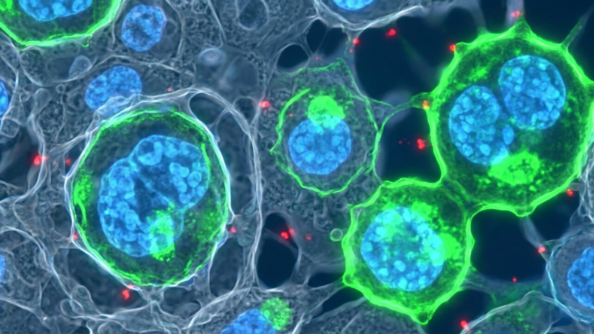
By using Clone 7B9E12 combined with glowing “fluorophores,” scientists can take high-resolution photos of LIGHT proteins sitting on the cell membrane, allowing them to see if the protein is moving, clustering together, or being swallowed by the cell.
Why “Clone 7B9E12” is Preferred
Clone 7B9E12 is preferred becuase of the following reasons:
- Because it is a monoclonal antibody, every single vial of 7B9E12 is identical, which means that regardless of the location, scientists can run the same experiment and get the same reliable results.
- This clone has been validated to work across many different “assays” (test types).
The Future: From Lab Bench to Clinic
Currently, the anti-LIGHT antibody is for Research Use Only (RUO); however, it is the tool that makes future drugs possible. By using Clone 7B9E12, researchers are currently discovering:
- How LIGHT can be used to “prime” the tumor microenvironment to make other immunotherapies (like PD-1 blockers) work better.
- Whether the presence of LIGHT in a patient’s biopsy can predict if they will respond well to certain treatments.
- How the LIGHT protein helps the body create “lymphoid structures” that act as local command centers for fighting cancer.




Be the first to comment on "How Antibody Clone 7B9E12 Helps in the Study of LIGHT Protein"