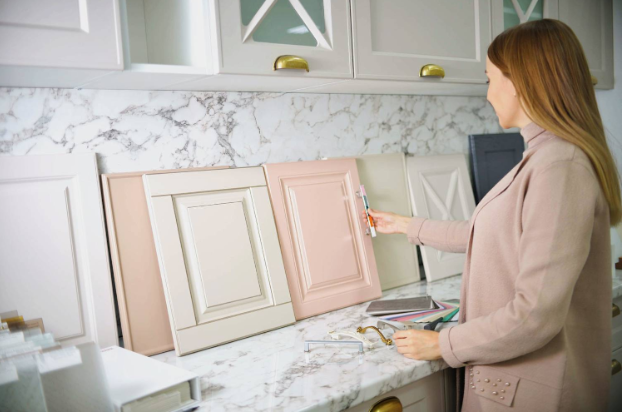
If you’re updating your kitchen, cabinet color is usually the first decision. And soft white is almost always at the top of the list. It’s bright, clean, and works in almost any home. But here’s what most people overlook the door style matters just as much as the color.
Pick the wrong door style, and even the prettiest soft white finish can fall flat. Pick the right one, and the whole kitchen feels pulled together, intentional, and elevated.
Homeowners in Orland Park, IL are making this shift. Instead of just asking “what color should my cabinets be?” they’re asking “what style of door will actually make this look great?” That’s a smart question. And if you’re asking it too, you’re already ahead of most.
There are so many modern cabinet door options available today. Some lean traditional, some go ultra-minimalist, and others land somewhere in between. Knowing which ones pair well with soft white helps you avoid costly mistakes and make a choice you’ll love for years.
This guide walks you through the most popular door styles. We’ll explain what makes each one work, where it shines, and how it interacts with soft white cabinetry. By the end, you’ll know exactly which direction suits your kitchen and your lifestyle.
Introduction: Why Door Style Changes Everything
Most people think the finish does all the work. It doesn’t.
Your cabinet door style creates the visual structure of your kitchen. It determines whether the space feels warm or cool, casual or formal, modern or timeless. Soft white is a neutral canvas — your door style is the brushstroke that gives it character.
Think of it this way: two kitchens can have the exact same soft white paint. But one has flat slab doors and the other has raised panel doors. They look completely different. One feels like a design studio in Chicago. The other feels like a cozy New England cottage.
That’s the power of door style. And once you understand it, choosing becomes much easier.
Shaker Style Doors
Shaker is probably the most popular cabinet door style in American kitchens right now. It’s been popular for decades, and there’s a very good reason for that.
The design is simple: a flat center panel with a framed border. No carvings, no curves, no fuss. Just clean lines and solid structure. That simplicity is exactly why it works so well with soft white.
When you pair Shaker-style cabinetry with a soft white finish, you get a kitchen that feels both timeless and current. The recessed panel casts a gentle shadow. That shadow adds subtle depth without breaking the calm, neutral tone of the white.
Shaker also crosses style boundaries like no other door. It works in farmhouse kitchens, transitional spaces, coastal homes, and even modern interiors. If you’re not sure which aesthetic fits you, Shaker is almost always a safe and smart starting point.
Hardware makes a big difference here. Matte black pulls give it an edge. Brushed nickel keeps it classic. Warm brass leans into a more elevated, designer feel.
Practical tip: If you’re in Orland Park, IL and planning a full kitchen remodel, Shaker doors in soft white are one of the easiest choices to resell later. Buyers recognize them, and they rarely feel dated.
Flat Panel (Slab) Doors
Slab doors are exactly what they sound like one flat, smooth surface. No panels, no frames, no detail. Just a clean face.
This style is bold in its simplicity. It doesn’t ask for attention. Instead, it lets the finish, the hardware, and the overall kitchen design do the talking.
With soft white cabinets, slab doors create a striking, almost gallery-like look. The smoothness of the door amplifies how bright and crisp the white appears. If you’re going for a sleek, modern kitchen, this combination is hard to beat.
Flat panel cabinets are especially popular in contemporary and Scandinavian-influenced kitchens. Open shelving, minimal hardware, and clean countertops pair naturally with this door style.
Want to take it further? Try push-to-open mechanisms instead of handles. It removes all visual noise and lets the soft white cabinets become the main feature.
Practical tip: Slab doors show fingerprints and smudges more easily. If you have young kids, factor in the cleaning routine before you commit.
Raised Panel Doors
Raised panel doors are the classic choice. They’ve been a staple in American homes for well over a century — and they still hold up.
The center panel is raised slightly above the frame. This creates dimension, shadow, and a richness that flat styles simply can’t replicate. On soft white cabinetry, that dimension becomes even more noticeable because light hits the surface differently throughout the day.
In the morning sun, the panel edges catch warm light. In the evening, they cast soft shadows. This quiet movement makes the kitchen feel alive and layered without any bold color or complicated design.
This style fits beautifully in traditional, colonial, and cottage-style kitchens. If your home has crown molding, decorative trim, or older architectural details, raised panel doors will feel completely at home.
Pair them with antique brass or oil-rubbed bronze hardware. Add crown molding on the upper cabinets. The result is a kitchen that feels rich and thoughtfully designed.
Practical tip: Raised panel doors have more grooves and edges to clean. Use a soft brush attachment on your vacuum to get into the corners without scratching the finish.
Beadboard Doors
Beadboard brings texture into the picture. Instead of a smooth or recessed panel, the center is filled with narrow vertical grooves. It’s a small detail, but it completely changes the feel of the cabinet.
On soft white cabinets, beadboard adds a warmth and personality that plainer styles don’t offer. It doesn’t feel stark or overly formal. It feels lived-in, cozy, and full of character.
This door style is most at home in farmhouse kitchens, coastal spaces, and cottage-inspired interiors. If you want your kitchen to feel like a place where people gather not just a place where food gets made beadboard supports that energy beautifully.
A popular design move in Orland Park, IL homes is mixing beadboard upper cabinets with Shaker lowers. The combination creates visual interest without going overboard. The soft white color ties both styles together seamlessly.
Practical tip: The grooves in beadboard can trap grease near the stove. Consider using this door style further from cooking zones, or commit to regular light cleaning.
Glass-Front Doors
Glass-front doors do something the others can’t they open the kitchen up visually. By replacing a solid panel with glass, you immediately create a sense of depth and air.
There are several types of glass to choose from. Clear glass gives a clean, display-cabinet look. Frosted glass lets in light while hiding clutter. Seeded glass adds vintage charm. Leaded glass is ornate and suits more formal kitchens.
On soft white cabinets, glass fronts are incredibly effective. The white frames the glass beautifully, making the cabinet feel intentional and styled. What’s behind the glass matters, though use these doors for dishes, glassware, or decorative pieces you’re proud to display.
If your kitchen feels closed off or compact, glass-front upper cabinets can make it feel larger without changing a single wall. The eye travels through the glass, creating the illusion of more space.
Practical tip: Commit to keeping what’s inside organized and visually cohesive. Mismatched mugs and stacked plastic containers behind glass can undermine the whole effect.
Louvered Doors
Louvered doors feature horizontal slats instead of a flat or raised panel. It’s an older style with strong character, and it’s making a comeback in kitchens that want personality.
The slats serve a function they allow airflow, making louvered doors ideal for pantry cabinets, appliance garages, and any cabinet that stores items needing ventilation.
On soft white cabinetry, louvered doors add a layered, textured look that’s hard to achieve any other way. The repeated horizontal lines create visual rhythm. In a kitchen with clean countertops and minimal accessories, that rhythm provides just enough detail to keep things interesting.
This style works especially well in Mediterranean-inspired kitchens, coastal homes, and spaces with a slightly retro or tropical feel. It’s unexpected, and that’s exactly its appeal.
Practical tip: Louvered doors are trickier to clean than flat styles. Use a soft brush or damp cloth to wipe between each slat.
Arched and Cathedral Panel Doors
Arched and cathedral doors bring a sculptural quality to the kitchen. Instead of straight-edged panels, the top of the center panel curves either gently (arch) or with a pointed peak (cathedral). The result is a door that feels almost architectural.
On soft white cabinets, these curved profiles add romance and elegance. The curves break up the geometric rigidity of a typical kitchen layout. They draw the eye upward and give the space a sense of grandeur.
If your home has older architectural features built-in shelving, decorative molding, vintage flooring this door style will feel completely natural. It also suits Victorian, Tuscan, and old-world design aesthetics well.
Pair arched doors with decorative hinges and antique brass or aged bronze hardware. The combination reinforces the elevated, handcrafted feel.
Many homeowners who choose these doors for their kitchens are also drawn to cream white kitchen cabinets rather than stark white. The warm undertone in cream white complements the softness of the curved panel, creating a look that feels rich without being heavy.
Practical tip: Cathedral doors work best on upper cabinets where the curve is more visible. Using them on lower cabinets can sometimes feel overdone unless it’s a very traditional space.
Mixing Door Styles the Right Way
You don’t have to use the same door style everywhere. In fact, mixing styles thoughtfully is a hallmark of well-designed kitchens.
The key is to anchor the mix with your soft white color. Because all your cabinets share the same finish, different door styles can coexist without the space feeling chaotic.
A few combinations that work well:
- Shaker lowers + glass-front uppers — classic and functional
- Flat slab base cabinets + beadboard island — modern meets warm
- Raised panel perimeter + arched glass upper displays — traditional and refined
What to avoid: mixing more than two door styles in one kitchen. Three or more styles usually creates visual confusion rather than character.
Also consider where you are in your design journey. Homeowners exploring cream white kitchen cabinets often find that softer door styles, beadboard, raised panel, cathedral feel more harmonious with that warmer tone. Flat slab and Shaker tend to look sharper with cooler, brighter whites.
Key Design Considerations Before You Decide
Before you commit to any door style, walk through these questions:
What’s the overall style of your home? Your kitchen should feel like it belongs. A sleek slab door in a Victorian farmhouse will look out of place. Match the door profile to your home’s bones.
What’s your hardware plan? Hardware is the jewelry of your cabinets. A great door style with the wrong hardware can still miss the mark. Decide on hardware early and let it influence your door choice.
What’s your maintenance tolerance? Flat slab doors are the easiest to clean. Raised panels, beadboard, and louvered doors take more effort. Be honest about your daily routine.
What’s your budget? MDF doors are more affordable and resist warping. Solid wood is more expensive but adds authenticity and longevity. Both can look beautiful in soft white.
Are you thinking about resale? In markets like Orland Park, IL, Shaker and flat panel doors in soft white consistently appeal to buyers. If resale matters, lean toward the widely loved over the highly personal.
Conclusion
Soft white cabinets are a foundation, not a finish line. The door style you choose on top of that foundation is what actually defines how your kitchen looks and feels.
Whether you love the clean geometry of a slab door, the warmth of beadboard, or the timeless structure of a Shaker frame, there’s a style that fits your home. You don’t need to follow trends. You need to follow your lifestyle and your space.
If you’re still unsure, visit a kitchen showroom and look at samples in person. Seeing how light hits different door profiles in real time changes everything.
The right choice is the one you’ll still love five years from now — and that starts with understanding your options today.
Be the first to comment on "Popular Door Styles That Elevate Soft White Kitchen Cabinets"