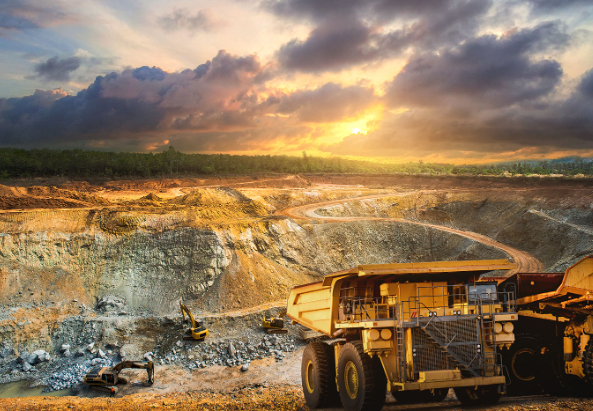
The mining industry is standing at a pivotal inflection point. Rising operational costs, increasing safety expectations, tightening regulatory frameworks, and global supply chain volatility have placed unprecedented pressure on mining companies to do more with less. Traditional productivity levers—labor expansion, equipment upgrades, or incremental process tweaks—are no longer sufficient to sustain long-term competitiveness.
What is redefining productivity today is not brute force or scale, but digital intelligence—the strategic application of data, automation, and connected systems to create smarter, faster, and more resilient mining operations. Forward-thinking mining enterprises are moving beyond isolated digital tools and adopting intelligence-driven operational ecosystems that unlock measurable gains across the entire value chain.
This shift is not theoretical. It is already reshaping how mines plan, operate, and grow.
The Productivity Challenge in Modern Mining
Mining productivity has been under strain for over a decade. Declining ore grades, deeper and more remote deposits, workforce constraints, and escalating compliance costs have eroded margins across commodities and geographies. At the same time, mining leaders face growing expectations from investors, governments, and communities to operate safely, sustainably, and transparently.
Legacy operating models—often reliant on fragmented systems, manual reporting, and reactive decision-making—are structurally misaligned with today’s operational complexity. Data exists, but it is siloed. Decisions are made, but often too late. Risks are identified, but after damage has already occurred.
Digital intelligence addresses this gap by transforming raw operational data into real-time, actionable insight, enabling proactive control rather than reactive correction.
What Digital Intelligence Means for Mining Operations
Digital intelligence in mining is not a single technology. It is a strategic capability built on the integration of multiple digital layers working in unison:
- Real-time data capture from equipment, sensors, and field systems
- Advanced analytics that translate data into operational insight
- Automation that executes decisions with speed and precision
- Centralized platforms that align planning, execution, and performance
When these elements are orchestrated effectively, mining operations evolve from static, manual environments into adaptive systems capable of self-optimization.
Unlocking Productivity Through Connected Operations
One of the most immediate productivity gains comes from eliminating operational silos. In many mining organizations, geology, planning, maintenance, operations, safety, and finance operate on disconnected systems. This fragmentation leads to delays, misalignment, and costly inefficiencies.
Digitally intelligent operations create a single operational source of truth, where data flows seamlessly across departments. Production plans adjust dynamically based on equipment availability. Maintenance schedules align with real usage rather than fixed intervals. Safety insights influence operational decisions in real time.
The result is not just faster execution, but better coordination, which directly translates into higher throughput and reduced downtime.
Predictive Decision-Making Replaces Reactive Management
Traditional mining operations often rely on historical data and manual inspections to guide decisions. By the time an issue is identified, the cost has already been incurred—whether in the form of equipment failure, production loss, or safety incidents.
Digital intelligence enables predictive decision-making by continuously analyzing operational patterns and detecting early warning signals. Equipment health, production bottlenecks, energy consumption, and environmental conditions can all be monitored proactively.
Instead of reacting to breakdowns, operations teams can anticipate them. Instead of adjusting plans after disruptions occur, leaders can prevent disruptions altogether. This shift from reactive to predictive management is one of the most powerful productivity multipliers available to modern mining enterprises.
Automation as a Force Multiplier, Not a Workforce Replacement
A common misconception is that automation is primarily about reducing headcount. In reality, its true value lies in amplifying human capability. Mining environments are complex, high-risk, and data-intensive—conditions where automation excels at handling repetitive, high-volume, and time-sensitive tasks.
Digital workflows automate data collection, reporting, approvals, and compliance tracking, freeing skilled professionals to focus on analysis, optimization, and strategic decision-making. Field teams spend less time on paperwork and more time on value-generating activities. Leadership gains faster visibility without waiting for delayed reports.
The net impact is higher productivity per employee, improved morale, and better utilization of specialized expertise.
Enhancing Asset Utilization and Equipment Performance
Capital assets represent one of the largest investments in mining operations. Yet many organizations fail to extract maximum value from their equipment due to poor visibility, inconsistent maintenance strategies, and limited performance analytics.
Digital intelligence enables continuous monitoring of asset performance across the fleet. Usage patterns, operating conditions, and maintenance history are analyzed holistically to optimize availability and lifespan. Maintenance shifts from calendar-based to condition-based, reducing unnecessary interventions while preventing catastrophic failures.
Higher equipment uptime directly improves production output, while optimized maintenance reduces costs—creating a compounding productivity advantage over time.
Data-Driven Safety and Compliance
Safety is inseparable from productivity. Incidents disrupt operations, damage reputation, and increase regulatory scrutiny. Digitally intelligent mining operations embed safety and compliance into daily workflows rather than treating them as afterthoughts.
Real-time monitoring of environmental conditions, equipment behavior, and workforce activity enables early identification of hazards. Automated alerts, digital inspections, and compliance dashboards ensure that risks are addressed before they escalate.
By integrating safety intelligence into operational decision-making, mining companies reduce incidents while maintaining uninterrupted production—a dual win for people and performance.
Strategic Visibility for Leadership Teams
At the executive level, productivity is not just about daily output—it is about strategic alignment. Leaders need clear visibility into performance drivers, cost structures, and operational risks across sites and regions.
Digital intelligence platforms consolidate operational data into executive-ready dashboards that provide real-time insights into KPIs, trends, and exceptions. This enables faster, more confident decision-making and supports long-term planning grounded in operational reality rather than assumptions.
When leadership decisions are informed by accurate, timely intelligence, organizations move faster and with greater precision.
Scaling Productivity Across Global Operations
For mining companies operating across multiple sites or countries, consistency is a major challenge. Best practices developed at one site often fail to scale due to system incompatibility or process variation.
Digitally intelligent frameworks standardize processes while remaining flexible enough to accommodate site-specific conditions. This enables organizations to replicate productivity gains across operations, accelerating transformation at scale.
The ability to scale intelligence—not just technology—is what separates isolated digital success stories from enterprise-wide productivity leadership.
The Future of Productivity in Mining
The future of mining productivity will not be defined by isolated tools or one-time digital projects. It will be shaped by organizations that treat digital intelligence as a core operational capability, continuously evolving alongside business objectives.
As artificial intelligence, advanced analytics, and connected systems mature, the productivity gap between digitally intelligent mining enterprises and laggards will widen. Those who invest early and strategically will operate safer, leaner, and more resilient mines—positioned to thrive in an increasingly complex global market.
Conclusion
Digital intelligence is no longer a competitive advantage reserved for a few innovators; it is becoming the foundation of sustainable productivity in modern mining. By integrating data, automation, and advanced analytics into a cohesive operational ecosystem, mining companies can unlock higher output, lower costs, improved safety, and faster decision-making.
Organizations that align technology investment with operational strategy are not just modernizing—they are future-proofing their businesses. As the industry continues to evolve, mining leaders who embrace intelligence-driven transformation will set the benchmark for operational excellence through mining industry software solutions.
Frequently Asked Questions
1. What is digital intelligence in mining operations?
Digital intelligence refers to the use of connected systems, real-time data, analytics, and automation to improve decision-making, efficiency, and operational control across mining activities.
2. How does digital intelligence improve mining productivity?
It reduces downtime, optimizes equipment performance, improves coordination between teams, enables predictive maintenance, and automates manual processes—resulting in higher output and lower operational costs.
3. Is digital transformation only suitable for large mining companies?
No. Both mid-sized and large mining organizations can benefit. Scalable digital platforms allow companies to start small and expand capabilities as operational maturity grows.
4. Does automation reduce the need for skilled mining professionals?
Automation enhances human expertise rather than replacing it. It removes repetitive tasks and empowers professionals to focus on higher-value analysis, optimization, and strategic planning.
5. How long does it take to see productivity gains from digital intelligence?
Many mining companies see measurable improvements within months, especially in areas like asset utilization, reporting efficiency, and downtime reduction, with compounding benefits over time.
Be the first to comment on "How Digital Intelligence Is Redefining Productivity Across Modern Mining Operations"